
The Untold Power of Hollywood, Music, and the American Brand
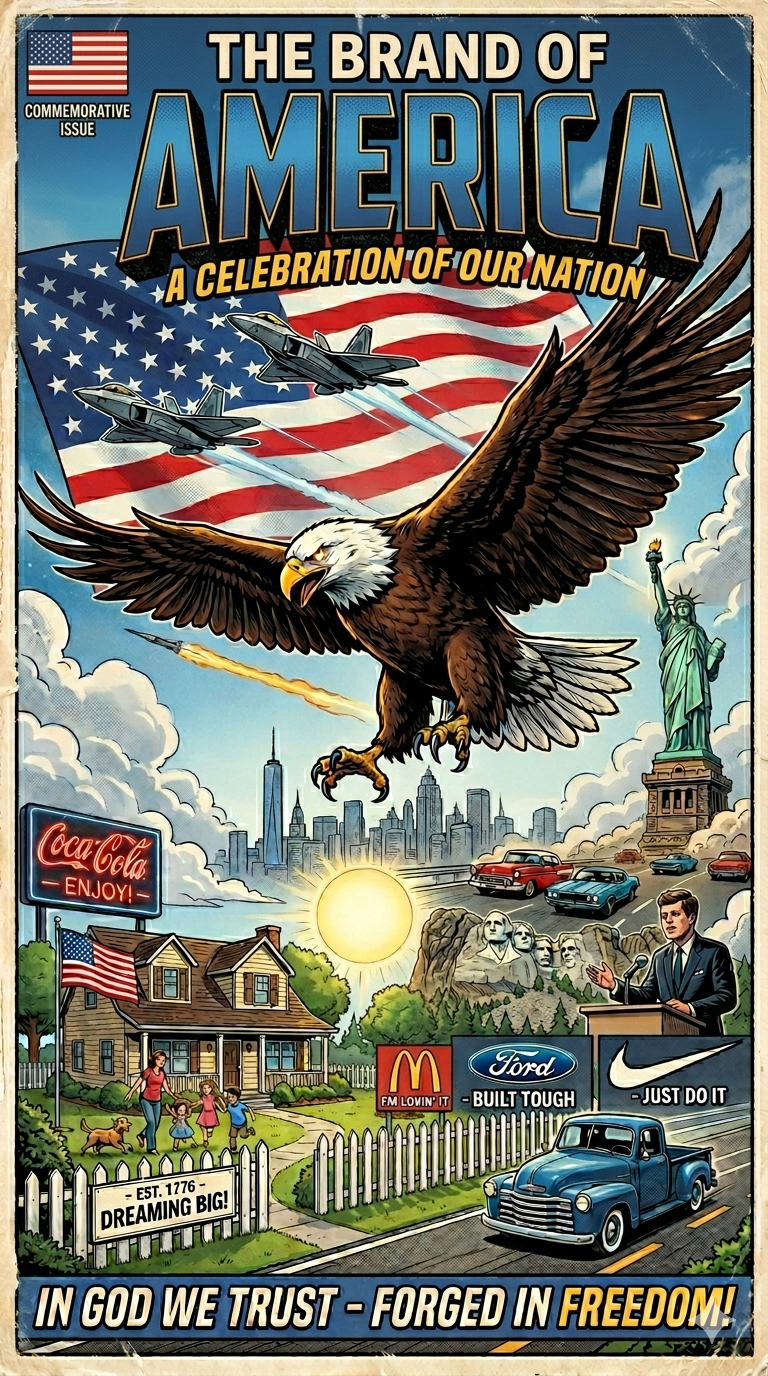
We often measure the power of nations through familiar and straight-forward metrics: GDP, military strength, or natural resources. Rankings are published consistently, comparing countries by economic output, defence spending, innovation, or even happiness. But these measurements, while useful, often overlook a less tangible form of power - one that may be just as important in shaping the world.
Culture, in the form of entertainment - the invisible engine of influence.
This is curious, because entertainment may be one of the most effective tools of influence conceivable. Unlike military force or economic might, entertainment does not compel; it attracts. It makes people admire, imitate, and ultimately feel connected to a country and its values, often without even meeting someone from that culture, let alone having visited there.
This article makes the case that one of the United States’ greatest strategic assets in the international arena has not only been its military or economic dominance, but its entertainment industry, particularly Hollywood and the music.
For decades, these industries have helped America make friends, shape tastes, export values, and build familiarity with its language and culture across borders.
Before making that case, it is worth acknowledging the traditional measures of power, and structural dynamics that either mute or amplify it.
Tangible and Measurable Power
When it comes to power, economic size matters. Military strength matters. Natural resources matter. Leadership matters.
Leadership is particularly interesting as it is more nuanced. It determines whether a country can convert its assets and might into actual influence (Nye, 2004). A nation can have immense resources, but without effective leadership, those advantages can be muted – what good is a sword if you can’t swing it? This helps explain why many middle powers, including a superpower like EU, despite having wealth, infrastructure, and educated populations, often struggle to project influence globally (Kagan, 2004). Mature democracies such as Canada, the UK, Denmark, or France are highly capable states, but their decision-making systems and enforcement mechanisms are often slower, more constrained, and shaped by institutional and structural friction (Fukuyama, 2014).
By contrast, smaller but highly centralized states like Singapore, the UAE, or El Salvador often punch above their weight. Their agility, decisiveness, and ability to move quickly can amplify their influence beyond what their size alone would suggest (Khanna, 2016; Fukuyama, 2014 and Lee, 2000 ).
Influence does not always arrive in a uniform, aboard an aircraft carrier, or attached to a trade agreement. Sometimes it arrives through a movie, a song, or a celebrity. Entertainment creates familiarity, familiarity creates likeability, and likeability often becomes influence.
And no country in modern history has harnessed the warm caress of this invisible force more effectively than the United States.
Entertainment Industry’s Impact in Making Friends and Influencing People – Case Study of the Cold War
It goes without saying that the United States remains the world’s pre-eminent superpower; it has the largest economy by nominal GDP and the most formidable military on Earth. For decades, however, some of the world’s brightest economists and institutions have repeatedly forecasted its imminent economic eclipse. In 2010, PricewaterhouseCoopers projected that China could overtake the United States as the world’s largest economy as early as 2020 (Hawksworth, 2010). Goldman Sachs’ Jim O’Neill, through the influential BRIC thesis, originally placed that moment around 2041 before revising the timeline forward to 2027 as China’s rise accelerated (O’Neill, 2011). These were not fringe predictions; they came from serious institutions, serious models, and serious people. And yet, they were wrong, or at the very least, early.
Predictions aside, what’s undeniable is that the United States possesses extraordinarily strong branding, and when it comes to slogans, symbolism, and national identity. People across the world know America as the “Land of the Free” and the “Home of the Brave.” They know it as “The Land of Opportunity”, and even those who have never set foot in the country have heard of the “American Dream”.
If you love history, then you must watch the twenty-four-episode television documentary Cold War, produced by Pat Mitchell and Jeremy Isaacs. In the context of culture, the episode Red Spring: The Sixties dives deeper into how Western music, films, fashion, and consumer culture crossed the Iron Curtain even when politics could not (Isaacs and Mitchell, 1998). People such as Nikolai Chernikh, who was a teenager in Russia in the 1960s, said:

“We had such a huge country with vast resources. All the people worked, so why were we dressed so badly in whatever we should lay our hands on, and ate whatever there was and not what we wanted? The explanation was simple: Uncle Sam and the imperialists are making an atomic bomb – so we had to make two, in order to frighten them. If they make two bombs, we had to produce four.”
Though Nikita Khrushchev did build large numbers of apartment blocks throughout the 1960s to alleviate the hardships of communal living, along with cultivating land in Central Asia as part of the Virgin Lands campaign, people longed for more than simply work and nation-building. In the words of Yuri Moskalenko, who was also a teenager in Russia in the 1960s:
“Fashion did penetrate our country. Late 50s and the beginning of the 60s when we got trousers, we changed them to make them very narrow and flute like. We could only get them off by using soap on our legs. We got punished severely for wearing them.”
The documentary continues by describing how Western styles, music, and dances found their way behind the Soviet Iron Curtain. The twist, combined with the glance over the shoulder, the swagger, all became symbols of something larger. Modern radios, including in Tallinn, Estonia, only around 90 kilometres from Helsinki, Finland, could on a clear day pick up forbidden Western broadcasts. Authorities jammed the airwaves in Estonia and other border regions of the Soviet Union, and it was almost impossible to record programs off the air. Even so, records were smuggled in. Nikolai Chernikh recalled:
“We used to go from one end of the town to another. Paid crazy money for them. Each record cost one ruble – that was a lot of money at the time. So I skipped lunch at school for a week, two weeks… Several of us would save up the money together and go and get a record, get back, put the record on and listen to rock and roll, to Elvis Presley. That was really something.”
The position of the KGB was that programming should be censored and designed in a manner considered beneficial both to the people and to the motherland, as former KGB head Vladimir Semichastny argued. Youth movements across the Soviet Union attempted to restore what authorities saw as proper socialist morals, but often in vain. Even writing a poem about loneliness, as Yevgeny Yevtushenko, a celebrated Soviet and Russian poet did, could be considered anti-Soviet because, in the eyes of the state, “how can you be lonely when you have two million of your brothers with you building a prosperous Soviet society?”
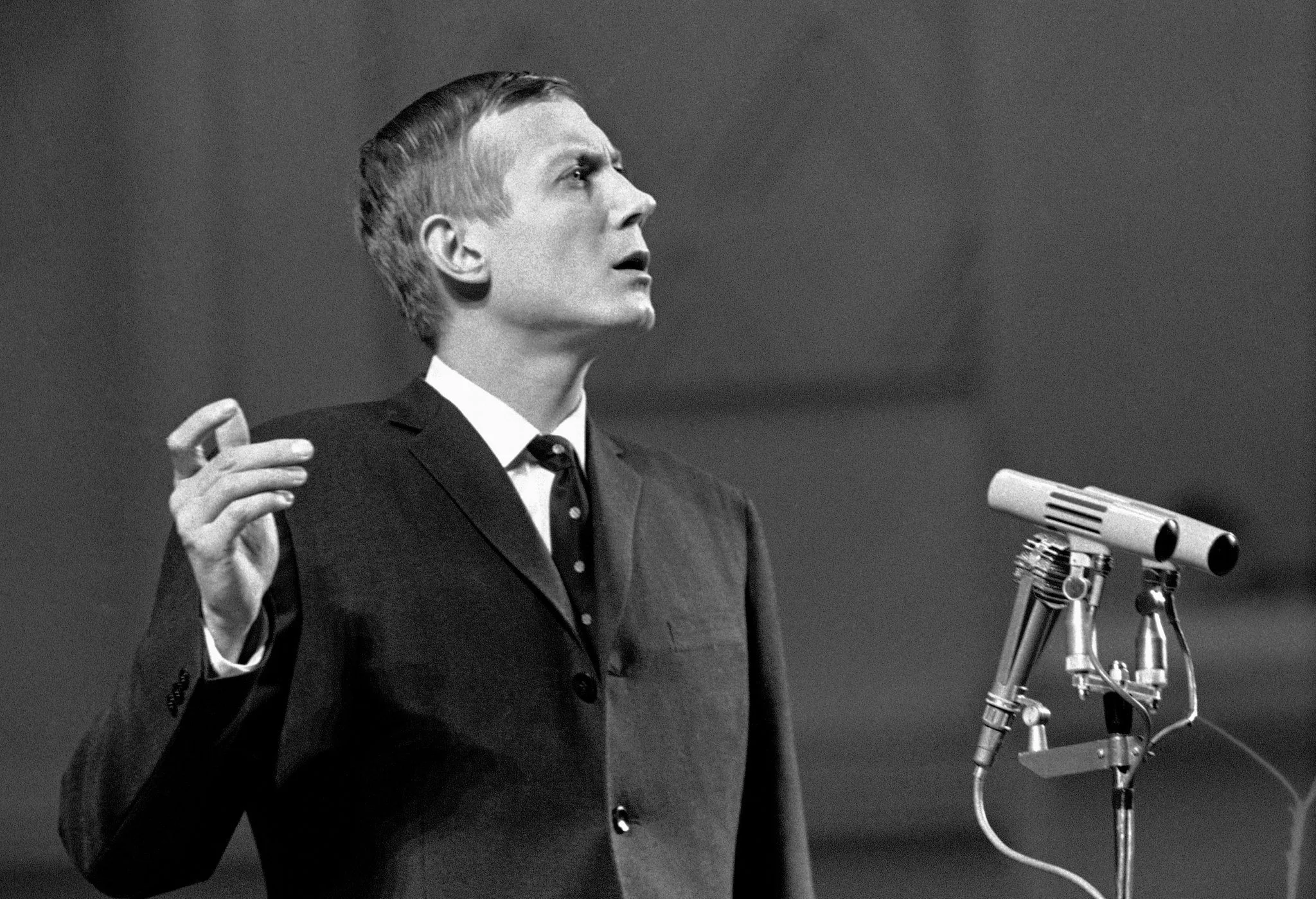
Yevgeny Yevtushenko during a reading of his poetry at Tchaikovsky Concert Hal in Moscow in December of 1962 (New York Times, 2017)
In the documentary series “Eesti (Täielik ja kontrollitud) Ajalugu”, which roughly translates to “Estonia (Complete and Verified) History”, episode seven describes how, during Leonid Brezhnev’s era of stagnation and increased Russification, cultural life in Estonia paradoxically became more vibrant (Vaarik, 2016). Bands such as Ruja were making waves especially in Estonia, and Apelsin was performing prominently also throughout the Soviet Union. Olav Osolin, interviewed by Andrus Vaarik, reminisced about the 1970s music scene in Tallinn. He recalled how groups such as Mikronid and Omega played at the Mustpeade Maja (roughly translated to House of the Blackheads) in Old Town Tallinn, often performing covers of The Beatles, The Rolling Stones, and The Hollies, “although the program said Tuhmanov and such, as was the custom at the time.”
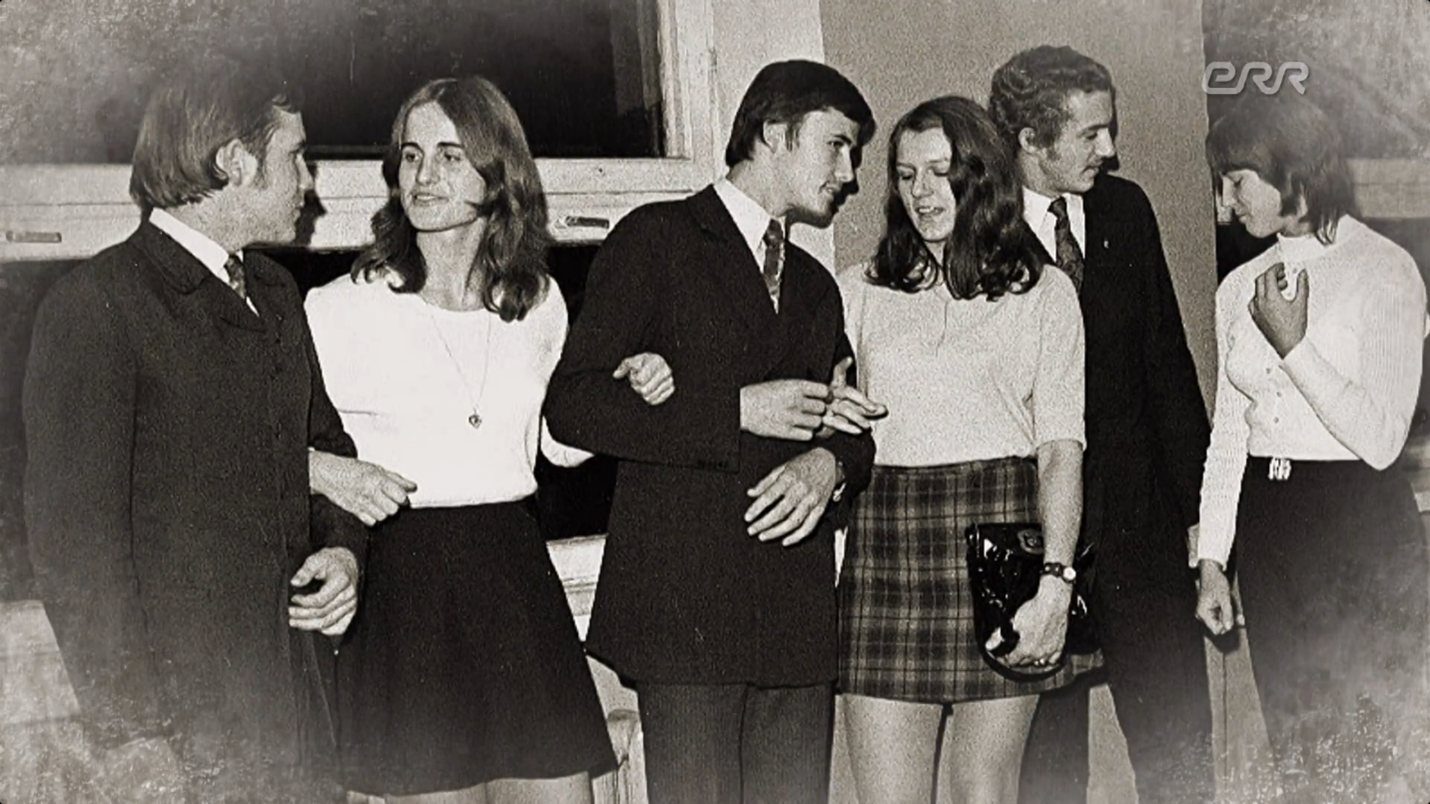
Photo captured at a party at Mustpeade M in the 1970s (screenshot taken from the Estonia (Complete and Verified) History Documentary, episode 7)
Osolin also described how Mustpeade Maja attracted “the hottest girls, fashionably dressed,” and the miniskirts were “getting shorter and shorter.” He recalled knowing “a hippie who sewed pants” and made him a pair with such wide trouser legs that “passing aunties told me I would sweep the streets clean.”
That, ultimately, is a part of the appeal of youth culture; Western styles came across as organic, emotional, creative, and deeply individualistic. New music and fashion often shock the older generation, and that rebellion is part of the attraction. To stand out. To express individuality. To feel modern. These were not merely fashion trends behind the Iron Curtain; they were subtle acts of cultural resistance and identity formation.
In the book Musta pori näkku, which roughly translates to Dirt in the Face, Estonian rock legend and guitarist of Singer Vinger, Mihkel Raud, dives deep into the Estonian music scene of the 1980s (Raud, 2015). He explains that artists did not merely listen to Western heavy metal - they lived it. Bands such as Iron Maiden, Metallica, and AC/DC were major influences, shaping not only the music itself, but the identity surrounding it.
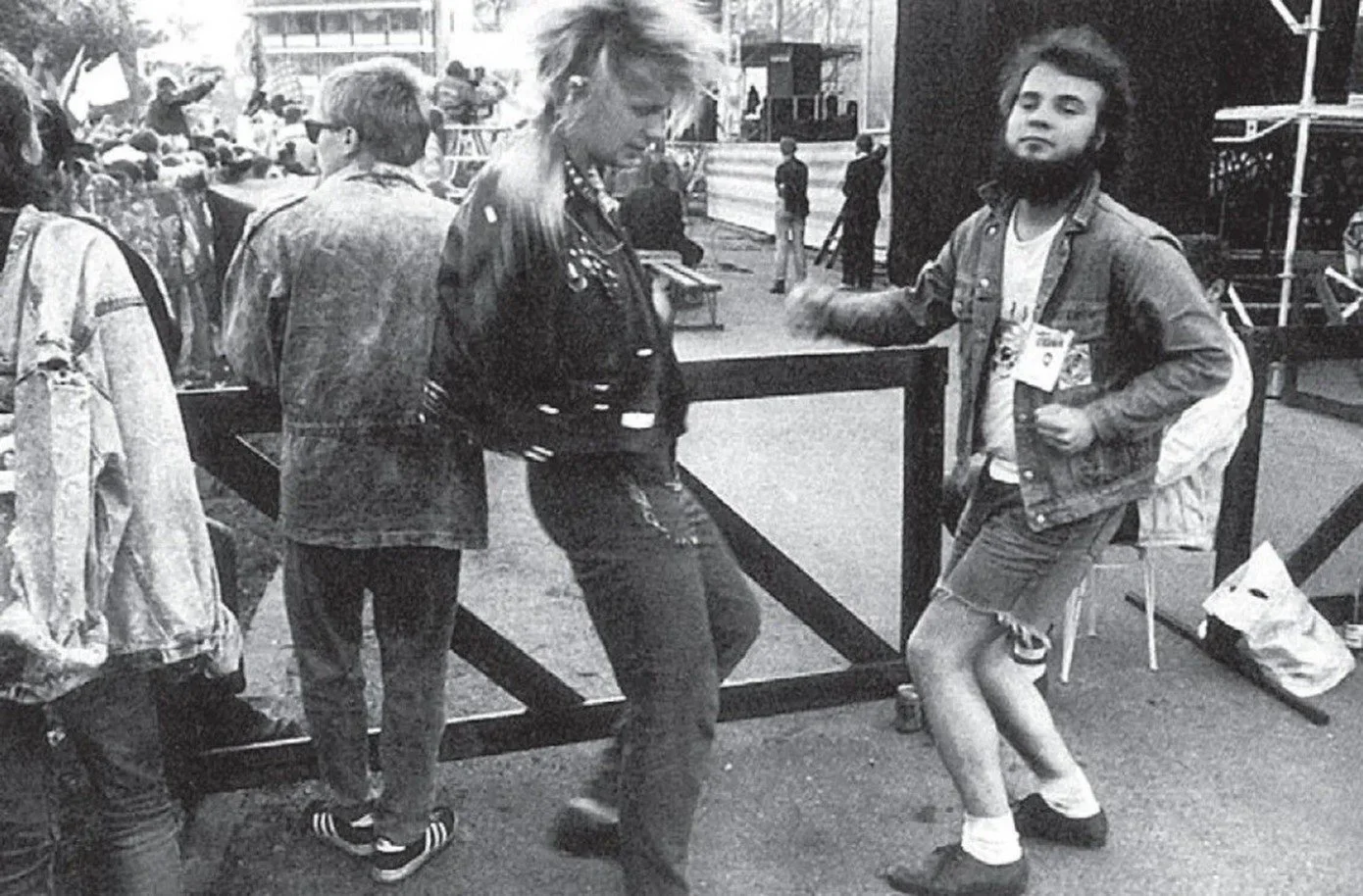
Members of the Estonian punk and rock scene at Rock Summer, including Mihkel Raud of Singer Vinger on the right side wearing denim shorts and jacket. Source: Anarchy in EST (Facebook), 27 September 2013.
Raud describes how Western metal became not only a sound, but fashion, attitude, and rebellion against the grayness of Soviet life. Finnish television, MTV aesthetics, and Western music videos shaped the worldview of many Estonian youth. This was not simply music culture; it was visual culture. Jeans, long hair, leather jackets, stage presence, swagger, and performance styles were admired, imitated, and ultimately integrated into the art and performances of many Estonian bands. With Perestroika and blue, black, and white flags flying (the Estonian flag is blue, black and white), Western music was not just music - it symbolised freedom.
In that context, the idea of the “Land of the Free” is more than a slogan. Freedom itself became an aspiration, something distant, romanticized, and deeply longed for. These examples illustrate that the most durable form of geopolitical power is not fear, wealth, or military strength, but cultural aspiration. Many artists throughout the 1960s, all the way into the 1990s, drew inspiration from these new sounds, styles, and ways of self-expression, adapting them and making them their own. That, ultimately, is what art does - it absorbs influence, reshapes it through local culture and experience, and creates something new and unique. Many people gravitated towards American and Western entertainment as it personified freedom of expression, individualism and ultimately freedom itself. The Soviet Union had censorship, propaganda, centralized control, and youth movements, yet American music and fashion still got through. Why? Because culture operates emotionally, not bureaucratically.
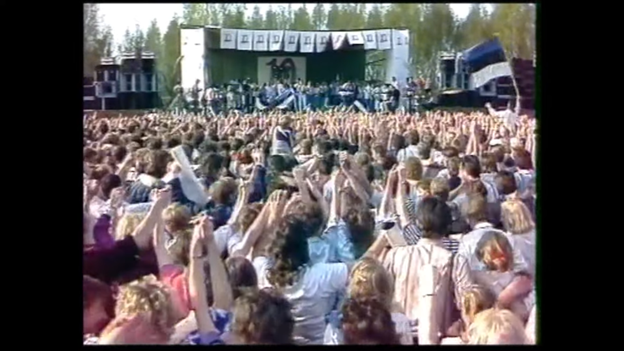
Entertainment succeeds where hard power often fails because people lower their guard when they are entertained. A movie, song, or celebrity can transmit values, language, aesthetics, and aspirations far more effectively than a political message, or a hard power measure could.
Ivo Linna performing “Eestlane Olen Ja Eestlaseks Jään” (I am Estonian , and I will Stay Estonian) in Tartu 1988 (Linna, I. and In Spe., 1988)
The Brand of America - Post Cold War
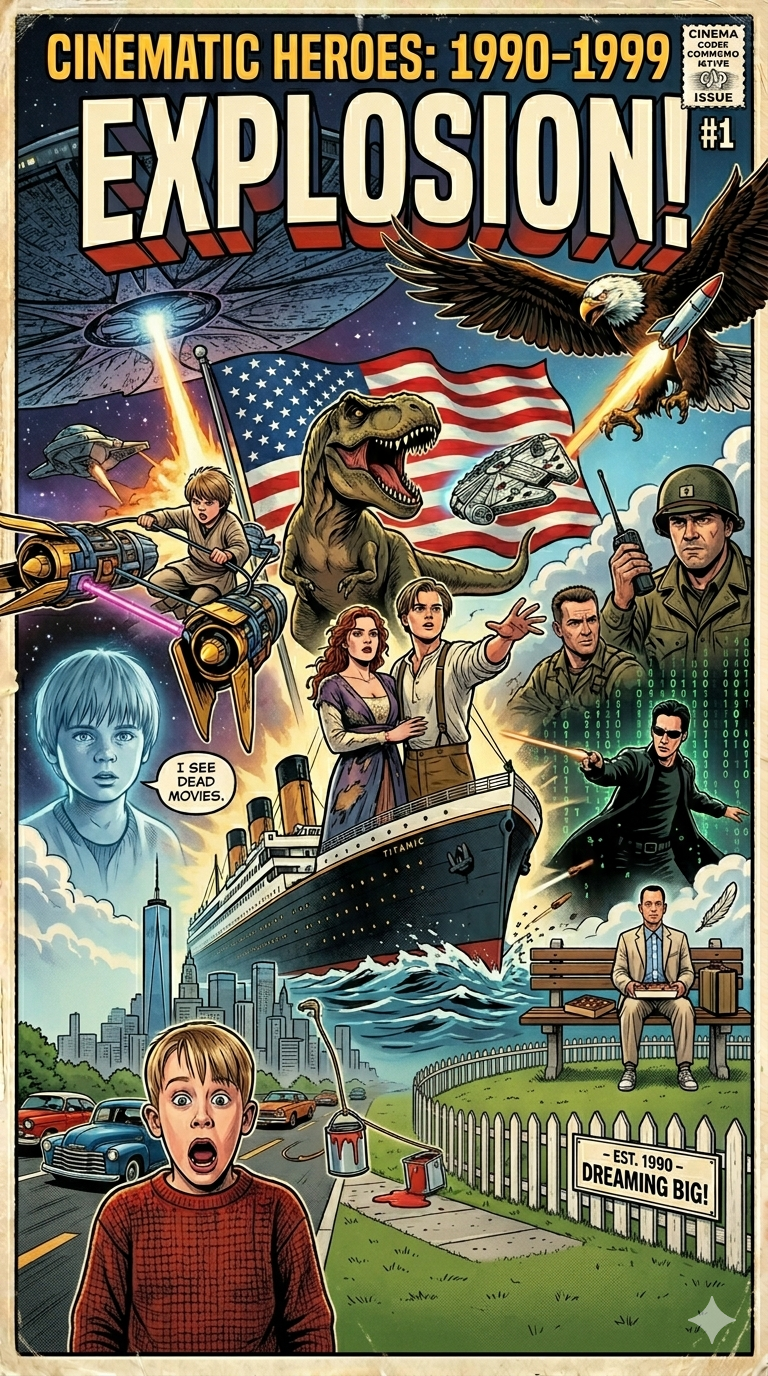
After the collapse of the Soviet Union in December 1991, the United States and its entertainment industry continued to flourish. With the fall of the Iron Curtain, American culture no longer had to penetrate ideological barriers quietly. Throughout the 1990s, the highest-grossing films globally every year came almost exclusively out of Hollywood (Box Office Mojo, 2025). Movies such as Home Alone and Titanic became cultural landmarks that continue to be watched around the world decades later.
These films did far more than generate revenue; they became vehicles for American soft power, exporting not only stories, but further solidified the image of America itself - its lifestyle, optimism, individualism, and the idea of the American Dream. Globalization, satellite television, MTV, cinemas, and eventually the internet accelerated this process dramatically, allowing American culture to reach billions simultaneously. For perhaps the first time in history, audiences across radically different societies were emotionally connected through the same American stories, music, celebrities, and cultural moments.
The Titanic was an exceptional example of a film that became a global phenomenon, earning more than 70% of its revenue internationally (Box Office Mojo, 2025). In Japan, it remained the highest-grossing film for over a decade, while in China it achieved unprecedented success despite restrictions on foreign media (Ebert, 1998).
Across the Middle East and Northern Europe alike, sold-out cinemas connected deeply with its universal themes of love, sacrifice, and tragedy, while “My Heart Will Go On” by Celine Dion became a global anthem. Hollywood had effectively created a universal cultural language.
As influential as Hollywood was and continues to be during the post-Soviet era, the movement that arguably won hearts and minds even more effectively around the world emerged not from Beverly Hills, but from the streets of the Bronx - Hip Hop.
Impact of Music, and especially Hip-Hop, On Youth Culture Around the World
It was a school night in 1999, when I was a few short weeks away from turning 9 years old. I heard noise coming from the living room, the TV was on. I got out of bed, walked to the living room and to my surprise my sister was there watching a music video – it was Eminem, “My Name Is”. I was intrigued, to say the least.
My best friend was the biggest Eminem fan for many years, while me and some other boys were tuning into 50 Cent and G Unit in the early 2000s. There was so much hip hop released, and we loved everything about it – the sound, the fashion, the lyrics which I was keen to understand. Also, we had artists from Estonia, such as the hip-hop collective A Rühm, who preached that hip-hop was a culture, lifestyle, graffiti, and DJ-ing, “not just a wide pair of wide pants and a CD that your younger sister gifted to you” - these were lyrics translated from Estonian from the song “Rap Is Sucks” on the album Laulmata jäänud laulud.

A-Rühm performing at their 15 year anniversary celebration in Tallinn (ERR, 2013)
This wasn’t happening just in Estonia; clearly if hip hop made it to Saaremaa, it made it everywhere. My friends in Finland were also listening to US hip hop, in addition to Finnish hip hop artists such as Fintelligens and Pikku G who took the country’s stages and airwaves by storm. Those stories were not outliers, they were the norm to millions, if not hundreds of millions of youth around the world, from Europe to Asia, from Latin America to Africa.
Hip Hop starting its global dominance as a genre from late 90s, and similarly to Rock, was not only music - it came with the whole package. It included distinctive way of dressing, MC-ing, break dancing, graffitiing, along with slang and the hustle mentality. Again, it was all learned and embraced, eventually filtered through the local cultural lens and transformed into something new and unique. The impact of hip hop on someone like myself has been nuanced; I loved the music, the fashion, and the expression, but through it I also absorbed countless words, phrases, and cultural references - from everyday slang to, of course, some decidedly non-PG subject matter. It is safe to say that by the time I turned 15, I had become conversational in English as much through listening to music and watching movies as through formal education. And while my sister also enjoyed hip hop, we also listened to boy bands like Backstreet Boys, and N Sync – we found at first confusing, and later funny when Justing Timberlake sang “It’s gonna be maaaayy”. We heard Britney’s “Oops I did it Again” most likely around the same time a teenager heard it in the USA or Germany. What the wide reach of US music achieved, was we were all experiencing those moments together. The same songs, are part of our memories, soundtracks to our lives. In the global context, that’s powerful. Pair the music with television shows such as Baywatch, The A-Team, MacGyver, and The Bold and the Beautiful, and the result was that magazines, television, and radio were not necessarily dominated by American culture around the world, but were unquestionably influenced by American stories, aesthetics, and values. Next, let’s talk about how the dominance of US entertainment, and media machine in general, has influenced how world is governed today.
Result of the US Entertainment Industry’s Success
The success of American entertainment did not simply produce famous actors, global celebrities, or profitable movies. It reshaped the cultural operating system of the modern world. America did not merely export products; it exported participation in a global culture. And at the centre of that culture was the English language.
English became infrastructure.
While the roots of English as a global language stretch back to the British Empire, American entertainment supercharged its global adoption in the twentieth and twenty-first centuries (Crystal, 2003). There is no exact global census, but it is reasonable to estimate that hundreds of millions, potentially over a billion people, have learned or significantly improved their English through entertainment media. Of the estimated 1.5 billion English learners worldwide, surveys consistently show that television, movies, video games, and music are among the most commonly used tools for achieving fluency (The British Council, 2013). Recently I was mind-boggled when IShowSpeed visited Estonia, and how many kids knew of him; there’s an infamous clip when there were so many kids on a pier watching IShowSpeed that it collapsed (Delfi, 2025). Through entertainers, children who had never visited US from Estonia, Brazil, Nigeria, or South Korea could still understand American slang, sing American songs, quote American movies, and follow American celebrities. Occasionally, there’s so many of them at the same place, and at the same time, on a pier, that it collapses.
Jokes aside - that is an extraordinary form of influence.
Key takeaway is that people did not learn English because they were forced to. They learned it because they wanted to participate in the cultural gravity orbiting around entertainers from the West and particularly from the States, people who spoke English. Entertainment lowered barriers to language acquisition in a way governments and educational systems never could. In many countries today, children become conversational in English long before they ever seriously study grammar in school.
The implications of this are enormous. English became the dominant language of globalization itself (Crystal, 2003). International institutions such as the United Nations, International Monetary Fund, and FIFA operate heavily in English, because English today is by far the largest second language spoken (Ethnologue, 2025). Global aviation relies on English (International Civil Aviation Organization, 2010). Much of international business, finance, science, and technology operates in English. The world’s largest media ecosystems, social platforms, podcasts, and content creators (including non-US entertainers) overwhelmingly produce content in English (Pennycook, 2007). That is not accidental. It is cultural dominance transformed into institutional infrastructure.
Even people who strongly criticize the United States often do so in English, using American-built platforms and participating in American-led cultural frameworks. Swedish climate activist Greta Thunberg speaks to a global audience largely through English. Around the world, countless creators on platforms owned by Meta, Alphabet Inc., and others build audiences using American cultural and technological ecosystems. The world may debate America constantly, but it still participates heavily in systems America helped build.
American stories also became global reference points. People who have never visited the United States often know:
who the American president is,
what cities like New York, Los Angeles, or Miami look like,
which celebrities are dating,
which songs top the charts,
and what social debates dominate American discourse.
Few countries have embedded themselves into the consciousness of humanity this deeply (Nye, 2004).
The Recent Deterioration of the American Brand
Yet reputation, whether for a country or a company, is fragile. Warren Buffett famously said: “It takes 20 years to build a reputation and five minutes to ruin it.” That principle applies not only to corporations or people, but also to nations (Buffett quoted in CNBC, 2018).
For decades, America’s influence depended not only on military and economic strength, but also on the perception that it represented a larger international project people wanted to participate in. Many countries aligned themselves with the United States not because they feared it, but because they admired it, trusted it, benefited from the system it led, and often aspired toward its values and culture.
That perception, however, has shown signs of strain in recent years.
When alliances begin to feel purely transactional, when international law appears selectively applied, or when long-standing allies such as Canada and members of the European Union are treated more like competitors than partners, the broader credibility of the American brand can weaken. Soft power depends heavily on consistency between image and behaviour (Nye, 2004). The more a country’s actions appear disconnected from the values it projects, the more difficult it becomes to sustain admiration and trust internationally.
Importantly, this does not mean American culture suddenly disappears. People can strongly disagree with American foreign policy while still listening to American music, using American technology platforms, or watching Hollywood films – that is the untold power of the American entertainment industry, as it continues to remains strong, prominent, and liked, despite the changes of global power dynamics.
Structural global power shifts are already taking place. Middle powers such as Canada and superpowers like the European Union are increasingly discussing strategic autonomy, supply chain independence, and reduced reliance on the United States in key sectors. This will ultimately strengthen some of America’s allies geopolitically while gradually weakening the assumption that American leadership is automatic or permanent (Kupchan, 2012). What will outlast American dominance is, once again, its soft power (i.e., artists and Hollywood), and the flywheel of enabling platforms hosted by Alphabet, Meta, and 24-hour news cycle platforms.
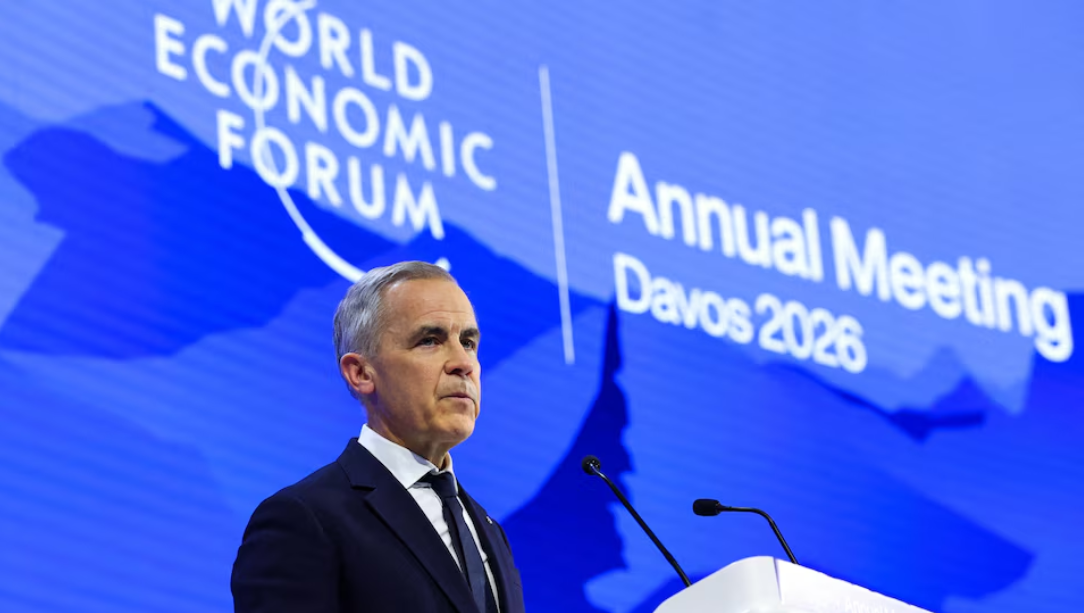
In a speech at Davos, the Prime Minister of Canada discussed an emerging new world order and urged middle powers to strengthen cooperation in response to rising global power blocs. (Denis Balibouse, photograph by Reuters, as reproduced in RCI, 2026).
Learnings: Soft Power, Brands, and Durable Systems
The broader lesson extends far beyond geopolitics.
There is hard power, and there is soft power. Think on US entertainment seeping into the USSR, which we discussed earlier. Hard power can force compliance temporarily through military strength, economic leverage, or political pressure. Soft power, however, creates voluntary participation. It makes people want to join, imitate, trust, and belong.
The most durable systems in the world are usually built not merely on force or efficiency, but on emotional buy-in.
That applies to countries, companies, brands, and even workplace cultures.
People often remain loyal to organizations because of mission, identity, belonging, meaning, and culture - not merely because of compensation packages, rules, or operational efficiency. In business, the companies that endure are often the ones that become emotionally embedded into people’s lives. Google became a verb. Uber became synonymous with ride-sharing. Coca-Cola became symbolic. Apple built not only products, but identity and lifestyle around its brand.
Ubiquity combined with emotional attachment creates durability.
The United States understood this exceptionally well throughout the twentieth century. It exported not only products, policies, or military alliances, but aspiration itself. Millions of people voluntarily consumed American culture, adopted American slang, learned English, followed American celebrities, and emotionally invested themselves in the stories America told about itself.
That is a form of power that cannot easily be measured on a balance sheet, and is very hard to replicate.
Conclusion
Fear can control behaviour temporarily. Aspiration changes behaviour voluntarily.
That may ultimately be the greatest lesson of the American century.
The United States became the world’s dominant power not only because it possessed enormous military and economic strength, but because people around the world genuinely liked aspects of what America represented. They listened to its music, watched its movies, adopted its fashion, learned its language, and participated in the cultural ecosystem it created. Even in countries politically opposed to the United States, people still consumed American culture and, in many cases, quietly admired it.
That admiration mattered.
Speaking English became an advantage. Participating in American-led cultural and technological systems became normal. Hollywood, hip hop, television, and later the internet made the United States emotionally familiar to billions of people across the planet.
And perhaps that is the deeper point - if a country truly wants to become a lasting superpower, tangible strength alone is not enough. Military power can compel. Economic power can incentivize. But soft power, the ability to make people admire you, imitate you, and willingly participate in the world you build, is what makes leadership durable.
References
Box Office Mojo. All Time Worldwide Box Office. IMDbPro, 2025. Available at: https://www.boxofficemojo.com (Accessed: 22 May 2026).
British Council. The English Effect: The Impact of English, What It’s Worth to the UK and Why It Matters to the World. London: British Council, 2013. Available at: https://www.britishcouncil.org/sites/default/files/english-effect-report-v2.pdf(Accessed: 6 June 2026).
Buffett, W. quoted in CNBC. ‘Warren Buffett: It takes 20 years to build a reputation and five minutes to ruin it’, CNBC, 2018. Available at: https://www.cnbc.com (Accessed: 22 May 2026).
Carney, M. ‘Middle Powers: Navigating a Rapidly Changing World’. Speech delivered at the World Economic Forum, Davos, Switzerland, 2025. Transcript published by Radio Canada International. Available at: https://ici.radio-canada.ca/rci/en/news/2222202/read-mark-carneys-full-speech-on-middle-powers-navigating-a-rapidly-changing-world (Accessed: 6 June 2026).
Crystal, D. English as a Global Language. 2nd edn. Cambridge: Cambridge University Press, 2003.
Delfi. ‘IShowSpeed visit to Estonia draws massive youth crowds’, Delfi Estonia, 2025.
Ebert, R. ‘Titanic Review’, Chicago Sun-Times, 1998.
ERR. ‘A-Rühm paljastab põnevaid fakte bändi ajaloost’ [A-Rühm Reveals Fascinating Facts About the Band’s History]. Eeter, Eesti Rahvusringhääling, 2013. Available at: https://eeter.err.ee/261496/a-ruhm-paljastab-ponevaid-fakte-bandi-ajaloost(Accessed: 6 June 2026).
Ethnologue. English Language Statistics. Dallas: SIL International, 2025. Available at: https://www.ethnologue.com (Accessed: 22 May 2026).
Fukuyama, F. Political Order and Political Decay. New York: Farrar, Straus and Giroux, 2014.
Hawksworth, J. ‘China could overtake US by 2020’, PricewaterhouseCoopers, 2010. Available at: https://www.pwc.com
International Civil Aviation Organization. Manual on the Implementation of ICAO Language Proficiency Requirements. Montreal: ICAO, 2010.
Isaacs, J. and Mitchell, P. Cold War. Television documentary series. BBC/CNN, 1998.
Kagan, R. Of Paradise and Power: America and Europe in the New World Order. New York: Alfred A. Knopf, 2003.
Kupchan, C. No One’s World: The West, the Rising Rest, and the Coming Global Turn. Oxford: Oxford University Press, 2012.
Linna, I. and In Spe. ‘Eestlane olen ja eestlaseks jään (Tartu 1988)’ [Live performance recording]. YouTube, 18 August 2011. Available at: https://www.youtube.com/watch?v=Wcf7it9O0OU (Accessed: 6 June 2026).
Nye, J. S. Soft Power: The Means to Success in World Politics. New York: PublicAffairs, 2004.
O’Neill, J. ‘China could overtake US by 2027’, Forbes, 2011. Available at: https://www.forbes.com
Pennycook, A. Global Englishes and Transcultural Flows. London: Routledge, 2007.
Raud, M. Musta pori näkku. Tallinn: Tammerraamat, 2015.
Vaarik, A. Eesti (täielik ja kontrollitud) ajalugu. Television documentary series. Eesti Rahvusringhääling, 2016.